

Ceasefire with Bombs to Follow
Lebanon bulletin

Since Friday, we’ve been dumbfounded to have learned that “the Lebanese Republic” is the formal name for the government of Lebanon, after it and the State of Israel signed a “framework agreement” on 26 June 2026 in Washington, D.C. Not for the immediate or unconditional withdrawal of Israel Defense Forces from their occupation in Lebanon, but for an eventual end to the state of war that has existed between these governments since 1948. But the mechanism is conditional: Israeli forces will withdraw from Lebanon only if Hezbollah disarms. The plan begins with two unspecified “pilot zones,” where Israel would pull back and the Lebanese army would assume security responsibility. Future withdrawals would depend on additional agreed pilot zones. A security annex reportedly details Lebanese army deployments and Israeli redeployments, but that annex has not been made public.
Israeli Prime Minister Benjamin Netanyahu framed the agreement as a way to keep the IDF in southern Lebanon until Hezbollah and other armed groups are disarmed and until Israel no longer faces a threat from Lebanon. Israel’s defense minister said the military has been told to prepare for an extended stay, reinforcing the idea that withdrawal is not immediate or guaranteed.
Hezbollah leader Naim Kassem rejected the deal as nonexistent from Hezbollah’s perspective, calling it a “humiliation” and warning that linking Israeli withdrawal to Hezbollah’s disarmament is dangerous. Hezbollah official Hassan Fadlallah warned that the agreement could lead to civil war because Hezbollah will not surrender its weapons and would resist Lebanese army measures against it. Hezbollah supporters protested in Beirut after the deal was announced.
Obviously the deal remains fragile, as 2026 has taught us about “ceasefires”: previous agreements between Lebanon and Israel during the latest war were not implemented on the ground. Israeli strikes continued after the signing, including a reported drone strike near Nabatiyeh. More than 4,000 people in Lebanon have reportedly been killed since the Iran war began.
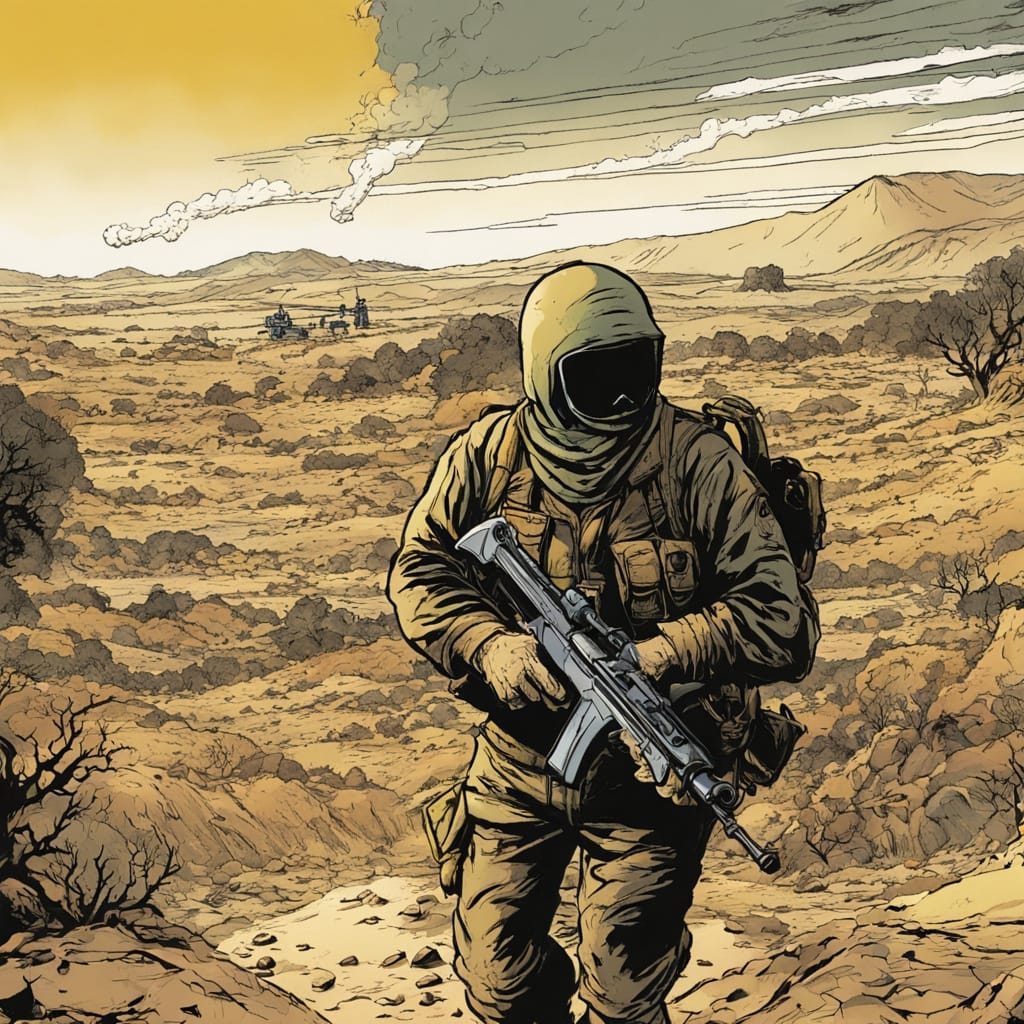
Some might feel tempted to see the signature itself as the event: Israel and Lebanon at the same table. Israel and Lebanon in the same sentence without the immediate accompaniment of artillery. Israel and Lebanon joined by the words “framework agreement,” “future peace,” “normalization,” “territorial integrity,” “sovereignty,” etc. But skeptics would naturally warn that these fine words won’t necessarily survive contact with reality.
Indeed, Lebanese-American journalist Rania Khalek offers a more sobering interpretation: the framework doesn’t represent a sovereignty breakthrough but a mandate for internal war dressed in the language of sovereignty. Because the agreement does not simply imagine the Lebanese state restoring authority over the south after Israel withdraws, but instead makes Israeli withdrawal contingent on the Lebanese Armed Forces first disarming Hezbollah and dismantling its infrastructure (with “verified disarmament” assessed under a U.S.-managed process), Khalek argues that the Lebanese government has effectively joined Washington and Tel Aviv in declaring war on a massive segment of Lebanon’s own population. For her, therefore, the question isn’t whether an impossible diplomatic configuration has appeared that can maintain this framework going forward, but whether in fact one has appeared that will make the lives of Lebanese civilians more difficult.
In other words, the sequencing matters: if Israel’s occupation of Lebanese territory is illegal, then Israeli withdrawal should not depend on whether Hezbollah exists, whether Hezbollah disarms, whether Lebanon satisfies American benchmarks, whether Marco Rubio is pleased with the quarterly performance review, or whether the empire has decided that the national nervous system of Lebanon has become sufficiently obedient to be permitted reconstruction. Occupation is not supposed to become lawful until the occupied party gets its domestic politics in order.
Yet this, Khalek argues, is precisely the inversion at the heart of the framework. Israel’s withdrawal becomes the prize Lebanon may receive after it proves itself willing and able to wage an internal campaign against the force that emerged, in the first place, from resistance to Israeli occupation. Reconstruction aid and the return of displaced civilians become conditioned on successful disarmament. Lebanese sovereignty becomes something Lebanon must earn by subordinating itself to a U.S.-Israeli security architecture. The government’s monopoly on force becomes not the ordinary attribute of a functioning state, but the euphemism through which a weak, fractured, externally pressured state is invited to attempt the one thing most likely to fracture it further.
Similarly, Usama Makdisi understands the Lebanon-Israel framework agreement not as a restoration of Lebanese sovereignty but as another episode in Lebanon’s long history as a stage for imperial politics. Since the nineteenth century, Lebanon has been both central and peripheral to great-power rivalry: a place where local politics are repeatedly entangled with imperial projects. The earlier European-Ottoman struggle helped produce Lebanon’s modern “culture of sectarianism,” and Makdisi sees the current moment as a continuation of that pattern, now under a U.S.-Israeli project that is trying to recover through Lebanon what it failed to achieve in the war with Iran.
He persuasively emphasizes the contradiction between how Lebanese officials and Israel describe the agreement. Lebanon’s president and prime minister present it as a step toward restoring the sovereignty of the Lebanese Republic in the south. Netanyahu, by contrast, celebrates it because Israel is not required to withdraw immediately; instead, the burden falls on the weak Lebanese army to disarm Hezbollah while Israel remains in occupation. For Makdisi too, that sequencing exposes the agreement’s real nature: after months of Israeli assault on Lebanon’s Shia population, mass displacement, attacks on journalists and paramedics, and thousands killed or wounded, the agreement preserves Israeli power while calling Lebanese submission “sovereignty.”
Against the backdrop of southern Lebanon under Israeli occupation, Makdisi argues that the agreement effectively validates Israel’s campaign and gives it leverage over whether displaced Lebanese civilians can return home. He also cites Trita Parsi’s view that the deal undercuts the U.S.-Iran MOU: the former now allows the conflict to continue until Hezbollah has been disarmed, while the latter called for a comprehensive regional ceasefire including Lebanon.
Makdisi also compares the agreement to the May 1983 Lebanon-Israel agreement, signed after Israel’s 1982 invasion by a weak, pro-American Lebanese government, widely seen as illegitimate because Israel still occupied large parts of Lebanon and annulled after the 1984 uprising against the U.S.-backed government. To his analysis, the current agreement may face a similar legitimacy crisis, and in that sense raises the same warning as Khalek of the risks that the Lebanese people will now face from their own government.
Those, of course, come on top of the risks that they will continue facing from the State of Israel, which he argues has two models for Lebanon: the “West Bank” model, in which a weak local authority performs security functions on Israel’s behalf while Israel continues domination and annexation; or the “Gaza” model, meaning destruction, ethnic cleansing, and obliteration. Lebanese fantasies of being separate from the Palestinian fate, he says, are ahistorical, warning that geography and geopolitics keep binding Lebanon’s future to Palestine’s. Therefore, while some may hail the agreement as peace or sovereignty out of exhaustion, hope, naiveté, or self-delusion, one may safely say that Makdisi warns them against betting on it.
Thus, the consequences of the agreement signed last Friday depend almost entirely on sequencing. If Israel withdraws and Lebanon then rebuilds state authority in the south, one kind of future becomes imaginable. If Lebanon must first disarm Hezbollah under American supervision while Israel remains in occupation, another kind of future becomes likely: not peace, but the Lebanese state being pressured to internalize Israel’s war through confrontation with a mass Shia political-military movement rooted in decades of war, occupation, and displacement.
Diplomatic language can soften the prospect. “Sovereignty” and “state authority” both sound clean, but not “civil war”: call it “disarmament of non-state armed groups” instead. Therefore, the agreement hides the potential trap of converting the Israeli occupation into a procedural norm, and of outsourcing of Israeli security to a Lebanese state too weak to perform the task without breaking itself—in other words, of formalizing ahead of schedule the Lebanese Republic’s position as a vassal. Certainly, taking orders from Washington and Tel Aviv about which domestic faction must be broken before Lebanese civilians can return to their homes sounds quite different from acting as a sovereign state.
Perhaps some pessimists on the possibility of peace would dismiss the agreement as meaningless. For them, however, there’s enough meaning in it to estimate that the prospect of peace in southern Lebanon has only become more distant. Meaningless agreements do not cause Hezbollah’s leadership to denounce them as humiliation, Israeli leaders to celebrate them as achievement, and Lebanese officials to call them sovereignty—even if the answers to “sovereignty for whom” and “under whose supervision” remain open to debate.
Of course, those aren’t secondary questions: they are the agreement. If it leads to Israeli withdrawal, civilian return, reconstruction, and a durable reduction in violence, then that will be worth saying. If it instead produces extended occupation through Lebanon’s imposed internal fracture, that too will be worth saying. But in the meantime, we must wait to test these peace processes, security assurances, and sovereignty claims against their outcomes. The paperwork has been signed, and now reality gets the deciding vote.